The EC-SEBRIS program has been a great experience this far. It is really enlightening to be taking classes about child development while working with children ages 1-5 at the same time. To simultaneously be taking relevant classes that I can apply to my every day work environment really allows for enhanced hands on learning. The placement portion of the program enriches the learning
since I can have actual examples and ideas in my head of behaviors and actions that we discuss in class. It is a bit overwhelming at times to have the practicum site requirement on top of classes, but it is worth it for the overlap of learning we receive between them.
The assignments we receive in class serve to give us a better feel for future assessments and observations we will have to do later on in our careers. It is nice to get a feel for administering these types of assessments while we have professors to guide us through it. The reflective practice course is a wonderful opportunity for us to get specific feedback about any questions we have with our placement site. It also gives us an opportunity to hear what other students’ experiences are like, so we have a wider scope of understanding.
- Suzanne Severance
The EC-SEBRIS certificate program is an interdisciplinary program for early childhood professionals who want to improve skills for working with young children who demonstrate socio-emotional and behavioral concerns, and their parents. Certificate courses can be applied towards a Master of Science in Child Development.
The EC-SEBRIS program will accept applications for Fall 2015 admission from Oct. 1, 2014 to March 2, 2015. For more information on the EC-SEBRIS graduate certificate program, visit our website. Apply now to take the first step toward your a career that will change lives!

Student blog run by the Department of Child and Family Development at San Diego State University
Friday, November 21, 2014

A MidYear Review on the EC-SEBRIS Certiicate Program
As I reflect on my experience in the EC-SEBRIS Certificate Program thus far, many thoughts and feelings surface. I have found that this program is a great fit for me philosophically and professionally. Being able to have a place to synthesize my professional experience, my life experience, and my educational experience is proving to be an incredible time of growth for me.
The assessment class (CSP 623) while necessary, is not my favorite. I feel for a couple of the students who do not have a background in Child and Family Development. For them this class is even harder. The material in this class is dense and hard to digest, at least for me and a few other student colleagues I have talked to. However, I can say that I understand psychometrics much better than I did before. Personally, I would like to spend more time on the DSM 0-3 in this class.
While we need to know assessments, unless we are licensed, in many cases we may not be performing the assessments we are studying when we have finished this certificate program. In my class with Professor Walsh (CFD 670), it is so interesting to learn about interpersonal neurobiology, and learning about the science of attachment, and the role it has in shaping who we are as adults. I am often moved to tears during his lectures because as I gain a deeper understanding of myself, I am able to answer so many questions I had in regard to myself. The opportunities to reflect with myself during group and individual practice is such a gift!
- Maura Mehrian
The EC-SEBRIS certificate program is an interdisciplinary program for early childhood professionals who want to improve skills for working with young children who demonstrate socio-emotional and behavioral concerns, and their parents. Certificate courses can be applied towards a Master of Science in Child Development.
The EC-SEBRIS program will accept applications for Fall 2015 admission from Oct. 1, 2014 to March 2, 2015. For more information on the EC-SEBRIS graduate certificate program, visit our website. Apply now to take the first step toward your a career that will change lives!
Monday, October 20, 2014
Graduate school infographics on early childhood education
San Diego State University offers a Masters of Science in Child Development and a Graduate Certificate degree in early childhood socio-emotional and behavior regulation intervention. Check out the following infographics to learn more about these programs.
The application period for Fall 2015 is open until March 2nd.


For more information on our graduate and certificate programs, visit coe.sdsu.edu/cfd. Connect with us on Twitter, Facebook, and Instagram for program and application updates.

Friday, October 17, 2014
Amy Gregory on becoming a change agent in early childhood education
Amy Gregory is a current student in the EC-SEBRIS Graduate Certificate program at San Diego State University. She shared what she is learning about becoming a change agent in the lives of children and the field early childhood education.
My experiences in the EC-SEBRIS program so far have been eye-opening, rewarding, and exciting. I never envisioned a graduate level program that could be so hands on, practical, and comprehensive. The EC-SEBRIS has encompassed all of these qualities for me so far!
I like that the information I am learning in my classes can be taken and directly applied to my work in the classroom. For example, thanks to my Ecobehavioral Assessment and Intervention class, I am able to pick out which assessment would be useful for each of my students. Then I can serve them better or get a better idea of their home life and family background.
Each class relates to one another in way that ties different areas of child development together that I had never considered before. Being able to analyze the teaching practices of others as well as your own in the reflective supervision class definitely makes you a change agent in recognizing best practices.
Taking a class dedicated exclusively to reflective supervision is great. It is an opportunity to review and share videotape interactions of my teaching practices with my 18-month old class.
My reflective supervision group is very helpful in giving me constructive criticism on how I could improve my teaching practices as well as helpful tips on how to deal with some of the challenging behaviors taking place in my classroom.
Seeing myself teaching on videotape really helps me identify what I do well and what I can improve on. It gives me the opportunity to review things that happen in my classroom that I may have missed in the moment. Being able to view videotapes of my fellow students' interactions with children in their worksites is helpful to me too. I make mental notes of positive ways to interact with children and creative activities to do. Seeing several different early childhood work sites gives me ideas of how to design classrooms that are effective.
Having a reflective supervision group is like having free help to support what you are trying to accomplish. Being a first year teacher myself, I have greatly appreciated this free help as my support system during a new life experience!
For one of my classes I worked on a group project about the effects of adverse childhood experiences relating to premature deaths. We completed research and created a professionally printed poster on our topic.

It was the first professional poster I have ever made and having my own work reflected in such a manner made me feel high up in the world. We had the opportunity to present our posters at the Early Childhood Mental Health We Can’t Wait Conference.
The opportunity to present at such a well renowned conference in the field made me feel like a real professional. Getting the opportunity to share my research with other professionals in the field, get their feedback, and in some cases teach them something new felt great. Seeing so many people in one place who all cared about the growing field of child development made me even more excited about my future career.

The EC-SEBRIS Graduate Certificate program is housed in the Department of Child and Family Development at San Diego State University. Certificate courses can be applied towards a Master of Science in Child Development.
The EC-SEBRIS program will accept applications for Fall 2015 admission until March 2, 2015. For more information on the EC-SEBRIS graduate certificate program, visit our website.
My experiences in the EC-SEBRIS program so far have been eye-opening, rewarding, and exciting. I never envisioned a graduate level program that could be so hands on, practical, and comprehensive. The EC-SEBRIS has encompassed all of these qualities for me so far!
I like that the information I am learning in my classes can be taken and directly applied to my work in the classroom. For example, thanks to my Ecobehavioral Assessment and Intervention class, I am able to pick out which assessment would be useful for each of my students. Then I can serve them better or get a better idea of their home life and family background.
Each class relates to one another in way that ties different areas of child development together that I had never considered before. Being able to analyze the teaching practices of others as well as your own in the reflective supervision class definitely makes you a change agent in recognizing best practices.
 |
| Presenting group research at the We Can't Wait conference |
My reflective supervision group is very helpful in giving me constructive criticism on how I could improve my teaching practices as well as helpful tips on how to deal with some of the challenging behaviors taking place in my classroom.
Seeing myself teaching on videotape really helps me identify what I do well and what I can improve on. It gives me the opportunity to review things that happen in my classroom that I may have missed in the moment. Being able to view videotapes of my fellow students' interactions with children in their worksites is helpful to me too. I make mental notes of positive ways to interact with children and creative activities to do. Seeing several different early childhood work sites gives me ideas of how to design classrooms that are effective.
Having a reflective supervision group is like having free help to support what you are trying to accomplish. Being a first year teacher myself, I have greatly appreciated this free help as my support system during a new life experience!
For one of my classes I worked on a group project about the effects of adverse childhood experiences relating to premature deaths. We completed research and created a professionally printed poster on our topic.
It was the first professional poster I have ever made and having my own work reflected in such a manner made me feel high up in the world. We had the opportunity to present our posters at the Early Childhood Mental Health We Can’t Wait Conference.
The opportunity to present at such a well renowned conference in the field made me feel like a real professional. Getting the opportunity to share my research with other professionals in the field, get their feedback, and in some cases teach them something new felt great. Seeing so many people in one place who all cared about the growing field of child development made me even more excited about my future career.
The EC-SEBRIS Graduate Certificate program is housed in the Department of Child and Family Development at San Diego State University. Certificate courses can be applied towards a Master of Science in Child Development.
The EC-SEBRIS program will accept applications for Fall 2015 admission until March 2, 2015. For more information on the EC-SEBRIS graduate certificate program, visit our website.
Friday, October 3, 2014
Kristen Eberly on the impact of early childhood trauma
SDSU graduate student Kristen Eberly shares why she decided the curriculum in the EC-SEBRIS certificate program was important to her career.
I am completing my Master of Social Work in the one-year Advanced Standing Program at San Diego State University. During orientation I was presented with the opportunity to pursue the EC-SEBRIS certificate. I was hesitant to enroll in this program, in addition to the MSW program, due to the additional classes and requirements.
I am completing my Master of Social Work in the one-year Advanced Standing Program at San Diego State University. During orientation I was presented with the opportunity to pursue the EC-SEBRIS certificate. I was hesitant to enroll in this program, in addition to the MSW program, due to the additional classes and requirements.
However, in numerous social work classes and interactions with clients I began to see a common theme. Early childhood trauma and/or a difficult parent-child relationship continues to make a tremendous impact in adults’ lives.
While society is making strides in raising mental health awareness and reducing stigmatization, more focus is required on early childhood mental health and intervention efforts. As a result, I decided I wanted to work in an early intervention setting and applied for the EC-SEBRIS program.
The EC-SEBRIS program is instrumental in linking clinical social work with early childhood intervention efforts. The program’s focus on attachment theory, neurobiology, emotional regulation, ecobehavioral assessment and intervention, applied behavior analysis, and positive behavioral support provides the knowledge and skills that will be essential and valued in the social work field. The classes and books are engaging, interesting, and relevant. In addition, the information learned during class can be applied immediately to my internship setting.
I strongly encourage anyone who is interested in social work and would like to work with children to look into this program. Linking both the MSW program and the EC-SEBRIS program provides an excellent opportunity to specialize in early childhood mental health.
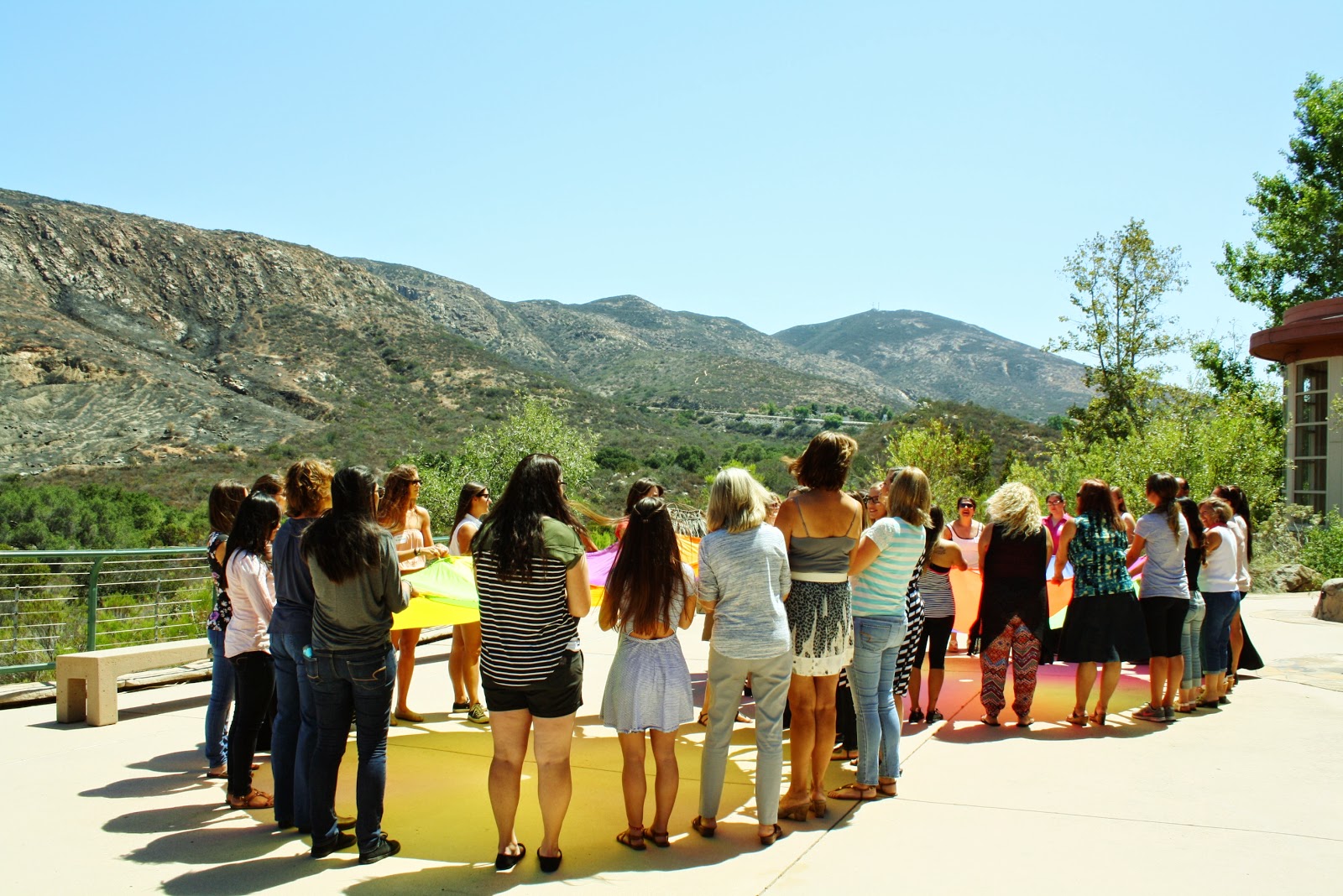 |
| EC-SEBRIS 2014 Orientation |
The Dept. of Child and Family Development also offers a Master of Science in Child Development. The Master of Science degree is one of only four child development programs available in the CSU system. The EC-SEBRIS program is accepting applications for Fall 2015 admission until March 2, 2015.
For more information on the EC-SEBRIS graduate certificate program, visit our website.
Thursday, September 25, 2014
A supportive staff and time to reflect
We asked EC-SEBRIS Certificate students to share their experiences in the San Diego State program. Current student Karina Desai discusses the program's workload and resources.
The EC-SEBRIS certificate program is an interdisciplinary program for early childhood professionals who want to improve skills for working with young children who demonstrate socio-emotional and behavioral concerns, and their parents. Certificate courses can be applied towards a Master of Science in Child Development.
The EC-SEBRIS program will accept applications for Fall 2015 admission from Oct. 1, 2014 to March 2, 2015. For more information on the EC-SEBRIS graduate certificate program, visit our website.
My experience in the EC-SEBRIS program so far has been great. It was very overwhelming at first, just receiving all the information regarding our classes and assignments and also knowing all of our big projects and tests that we would have to complete.
But I quickly learned that we had a great staff and other great resources. Our reflective group supervisors and our site coach that were more than happy to help if we ever needed. I absolutely love the site that I have been placed at (Head Start- La Mesa), and I enjoy being there every day with the kids.
My favorite class is the reflective group because it gives me a chance to talk to Dr. Kent and a few of my cohorts about any issues that I have. She gives me great advice on any problems that I am having trouble with.
I am really looking forward to the rest of this semester and applying what I have learned in my classes to my every day experiences with children.
The EC-SEBRIS certificate program is an interdisciplinary program for early childhood professionals who want to improve skills for working with young children who demonstrate socio-emotional and behavioral concerns, and their parents. Certificate courses can be applied towards a Master of Science in Child Development.
The EC-SEBRIS program will accept applications for Fall 2015 admission from Oct. 1, 2014 to March 2, 2015. For more information on the EC-SEBRIS graduate certificate program, visit our website.
Wednesday, September 24, 2014
Behavioral consultant applies certificate coursework directly to the field
Current student Zoey Orgel shares the highlights of what she has gained from the EC-SEBRIS Certificate Program:
The EC-SEBRIS Certificate Program has been extremely beneficial to me thus far! I currently work as a behavioral consultant, providing 1:1 therapy for children with autism. I have learned a lot about ways to apply reflective practice skills to work with young children as well as exploring possible approaches to work effectively with the children and families.
I have also learned a great portion of ecobehavioral assessment and intervention, focusing on understanding measurement and structured testing procedures related to socio-behavioral interventions for children in multiple settings.
Lastly, I have been learning about theories and approaches to emotional regulation in childcare settings, studying attachment, interpersonal neurobiology, and other developmental theories with a special emphasis on the applied use in early care and education settings.
All of these classes are interrelated and I have used the knowledge I have gained in each class when working in the field. While I have gained a lot of useful information within the first month of school, I am looking forward to what the rest of the program has to offer! I am extremely excited for next semester's ABA class as I consistently implement this type of therapy throughout my sessions in the field!The EC-SEBRIS Certificate is a program of the San Diego State Department of Child and Family Development. The Dept. of Child and Family Development also offers a Master of Science in Child Development. The Master of Science degree is one of only four child development programs available in the CSU system.
|
| EC-SEBRIS 2014 Orientation |
The EC-SEBRIS program will accept applications for Fall 2015 admission from Oct. 1, 2014 to March 2, 2015.
For more information on the EC-SEBRIS graduate certificate program, visit our website.
Subscribe to:
Posts (Atom)